
Health Insurance
Our team of licensed insurance agents is committed to understanding your needs and finding the plan that fits you best. We represent multiple insurance companies across the state of West Virginia to ensure the plan you select meets both your medical and financial needs.
Medicare Supplement Insurance Plans
Medicare Advantage Health Plans (Part C)
Medicare Part D Prescription Drug Plans
Individual & Family Health Plans
Dental, Vision & Hearing Plans
Cancer, Heart Attack & Stroke Plans

Understanding My Options
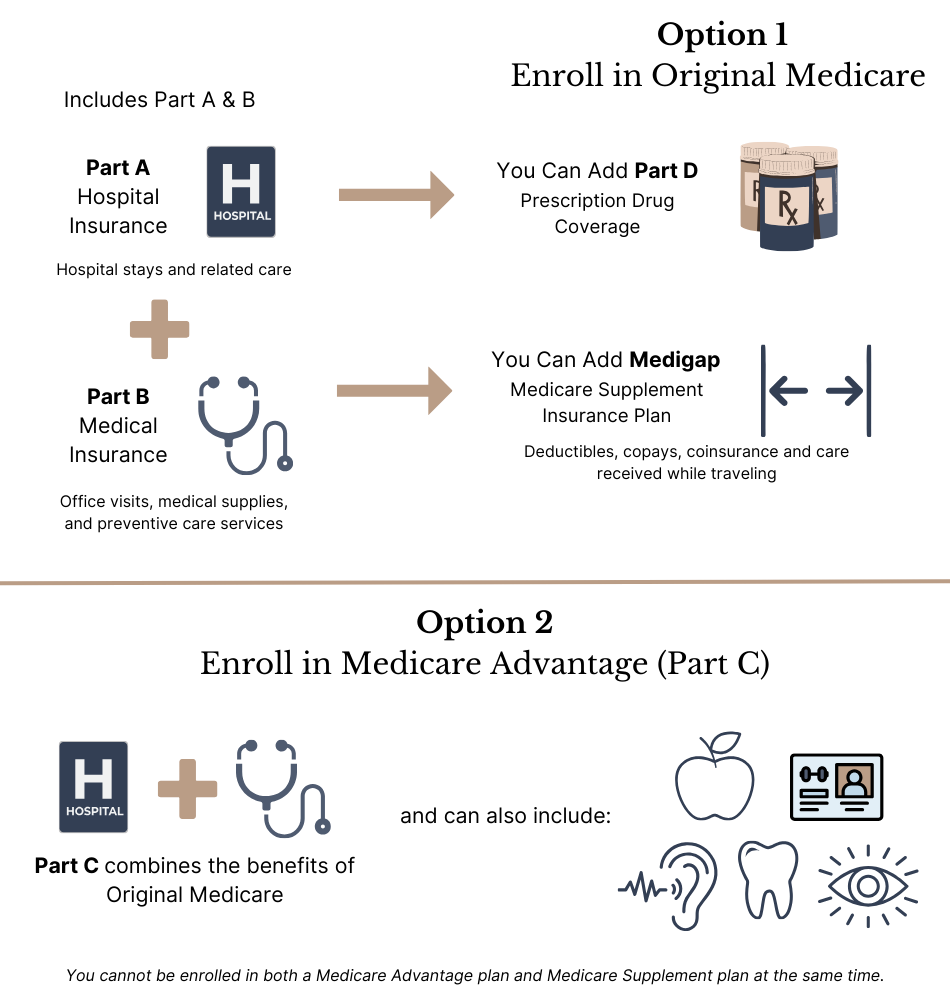
What’s the Difference?
Medicare Advantage (Part C)
Medicare Advantage plans, also known as Part C, is an alternative way to receive your Medicare benefits. Medicare Advantage plans sometimes include prescription drug coverage and other benefits like: gym memberships, over-the-counter (OTC) benefits, dental, vision, and hearing coverage, transportation, and more.
Medicare Supplements
Also known as Medigap, Medicare Supplements do just as their name suggests: they fill in the gaps left behind by Original Medicare Part A & B. Medicare Supplement insurance plans are “standardized” in West Virginia. The standardized policies that insurance companies offer must provide the same benefits.
Individual & Family Health Plans
Also known as Obamacare, these health plans are available to individuals and families who are not receiving health insurance through their employer or union, and who do not qualify for Medicare. ACA plans offer subsidies based on income that help cut health insurance costs for West Virginians that qualify.
Frequently Asked Questions
Who is eligible for Medicare?
Original Medicare Part A (Hospital insurance) and Part B (Medical insurance) are available to people:
- Age 65 or older
- Younger than 65 with a qualifying disability
- With ESRD, permanent kidney failure requiring dialysis or a kidney transplant
What are the qualifications for those age 65 and older?
People age 65 or older, who are citizens or permanent residents of the United States, are eligible for Medicare at if one of the following applies:
- You receive or are eligible to receive benefits from Social Security or the Railroad Retirement Board (RRB)
- Your spouse (living or deceased, including divorced spouses) receives or is eligible to receive Social Security or RRB benefits
- You or your spouse worked long enough in a government job where you paid Medicare taxes
- You’re the dependent parent of a fully insured deceased child
What are the qualifications for those under age 65?
If you are under age 65, you may be eligible for Medicare if:
- You’ve been entitled to Social Security Disability Insurance (SSDI) benefits for 24 months
- You receive a disability pension from the RRB and meet certain conditions
- You receive SSDI benefits because you have Lou Gehrig’s disease (amyotrophic lateral sclerosis)
- You worked long enough in a government job, paid Medicare taxes and have met the requirements of the SSDI program for 24 months
- You’re the child or surviving spouse age 50 or older (including a divorced surviving spouse) of a worker who has worked long enough under Social Security or in a Medicare-covered government job, and you meet the requirements of the SSDI program
- You have permanent kidney failure (end stage renal disease) and you receive maintenance dialysis or a kidney transplant, and 1 of the following applies:
- You’ve worked long enough under Social Security or the railroad retirement system
- You’ve worked long enough in a Medicare-covered government job
- You’re the child or spouse (including a divorced spouse) of a worker (living or deceased) who has worked long enough under Social Security or in a Medicare-covered government job.
Is Medicare mandatory?
Medicare is not mandatory. However, if you do not enroll for Medicare Part B (medical insurance) when you are first eligible, you may have to pay a higher premium cost. If you turn 65 and still have insurance through an employer or union, you can keep that insurance and wait to enroll in Medicare, using a Special Enrollment Period (SEP).
How do I sign up for Medicare?
In many cases, eligible individuals will automatically be enrolled; others may need to apply for Medicare on their own. If this is the case, it’s essential to sign up during the Initial Enrollment Period (IEP), which is around your 65th birthday or 25th disability check. You will have a 7-month period to browse options and sign up, including your birth month, 3 months before, and the 3 months after your birth month. If you birthday is the first of the month, you will be greatest as if you were born the month before your birth month.
When does Medicare coverage start?
Medicare coverage is dependent on when you have signed up and your sign-up period. Coverage always starts on the first of the month. If you meet the criteria for Premium-free Part A, your coverage starts the month you turn 65-years old or the month before if your birthday is the first of the month. Part B and Premium-free Part A start dates are dependent on sign-up:
- If you sign up the month before you turn 65, then, coverage starts the month you are 65.
- If you sign up during the month you turn 65th, then, coverage starts the next month.
- If you sign up 1 month after you are 65, then, coverage starts 2 months after you have signed up.
- If you sign up 2 or 3 months after you turn 65, then, coverage starts 3 months after you have signed up.
You can also sign up for Premium-free Part A after your 65th birthday. Coverage starts 6 months back from sign-up or when you apply for benefits from Social Security or the Railroad Retirement Board.
After your IEP is over, you can only sign up for Part B and Premium-free Part A during the other periods of General Enrollment or Special Enrollment.
For Original Medicare, the General Enrollment Period is January 1st – March 31st, with coverage beginning on July 1. You may have to pay a monthly late enrollment penalty if you do not qualify for special situations. Under Special Situations or the SEP, you can sign up for Part B and Premium-free Part A without paying a late enrollment penalty. Your coverage will start the next month.
How much do Medicare Part A and Part B premiums cost?
Most people don’t have to pay a premium for Part A if they or their spouse paid Medicare taxes for at least 10 years while they were working.
There’s also no premium for Part A if:
You’re receiving Social Security.
You’ve received disability benefits for at least 24 months.
There is a monthly premium for Part B, which is deducted from your Social Security or, for those who receive them, from their Railroad Retirement Board (RRB) benefits. For 2024, the standard premium for Part B coverage is $174.70 – or higher, depending on your income.
When can I enroll in a Medicare Advantage plan?
You can enroll in a Medicare Advantage Plan during the Medicare Advantage Open Enrollment Period from January 1st – March 31st. You can also join a new plan, switch plans, or drop a Medicare Advantage plan during the Open Enrollment Period from October 15th – December 7th of every year.
How much does Medicare Advantage cost?
With Medicare Advantage options, instead of paying your healthcare bills directly, the federal government pays private insurance companies to administer your coverage.
While there is a monthly premium for Medicare Advantage options, many private insurance companies choose to offer affordable or $0 plan premiums to compete for your business. They also set the guidelines for your deductible, coinsurance and copays. To learn about Medicare Advantage options available in your area, you can make an appointment with a licensed Just Us Retirement Solutions insurance agent.
As with Original Medicare members, Medicare Advantage members must continue to pay their Part B premium.